
Metropolis with many city centers. The busiest intersection in the world and lots of neonlights. But also a city with peaceful temples and beautiful parks. Not lost in translation, but lost in Tokyo.
Where to start in Tokyo? It’s a difficult question since there isn’t a center in Tokyo, or better said there isn’t only one center in Tokyo. My starting point became Shinjuku. Not only was it one of the neigbourhoods I was interested in, but it was very close to Shinjuku station. The station is the world’s busiest. That makes it very easy to navigate greater Tokyo from there. And that’s my first advice: use the trains & metros and use them well. Tokyo is so big, and I mean really big. There’s a reason why it’s the largest city in the world. Explore Tokyo can’t be done without using the train transport.
I can’t say it enough: Tokyo is huge. That’s why it’s important to prepare yourself when you’ll visit Tokyo. The city is so enormous that there are many special wards in the city itself. Each ward has its own look and feel and the size can be allmost compared to that of the center of a small village. So visiting and seeing every ward is almost an impossible task – especially if you want to take some time to get into the vibe of the ward you’re in. So look up some information about the wards, make a wishlist, and make sure you visit the ones you really want to see. If there’s more time, you can always visit other wards or revisit the ones you like the most. After all, it’s Tokyo, so you can always see something new.
I went to Tokyo for 7 days. Most people would think that’s too much for a citytrip but like I said before, Tokyo doesn’t have the size of the average city. Before leaving I was considering to visit Kamakura, Nikko and the Snow Monkey Park. I’m sure all three of them are interesting but since they are not really close to Tokyo – and it would require a daytrip to each of them, I decided to skip them and concentrate myself only on Tokyo. You don’t go to New York city either to spend half of your time outside New York, right?
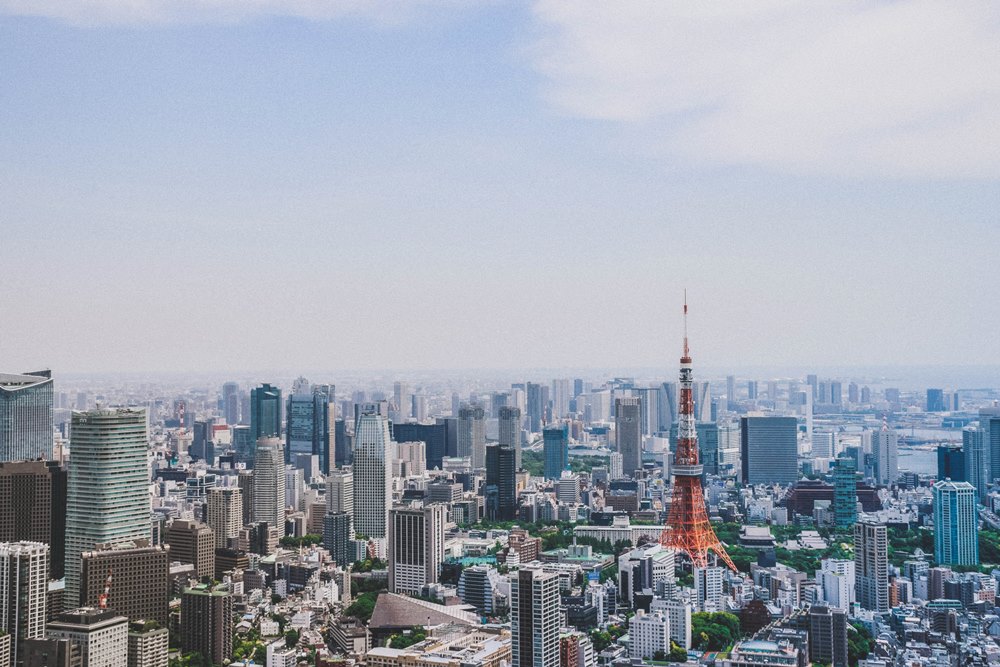
The first day after arriving, the weather was great. Before diving into Tokyo, I wanted to have a greater view of the city I was going to explore. There are many skyviews in Tokyo, the most famous ones being the Tokyo Tower (the Japanese Eiffel tower) and the Tokyo Sky Tree but that means that those two are also the most crowded. That’s why I went tot he viewpoint at Roppongi Hills: almost no people – I was alone on the skydeck except for the security, a cheaper ticket and the Tokyo Tower – which is one of the iconic buildings of Tokyo – was included in the view (which obviously isn’t when you are on the tower itself). The view was quite spectacular.
After the view, I went by foot to Shibuya. There is a lot of construction going on at the station, probably for the coming Olympic Games, but the busiest place was still Shibuya crossing. Said to be the busiest intersection in the world, people cross the streets in every way when the light turns green. This may seem like chaos but it doesn’t feel like that at all when you’re there. Japanese people are the most organised people I’ve ever encountered. Before the light turns green, people are waiting in lines. At all the stations there are marks at the floor where the trains will stop and where the doors will open. People are waiting in line at each of these marks before the train arrives. When it arrives, people that are waiting, go aside to let people who want to get off, leave the train. Because everything is so organised, everything is reallty efficient and transportation goes really quickly. No one cuts the line – the only ones I saw it doing where some tourists.
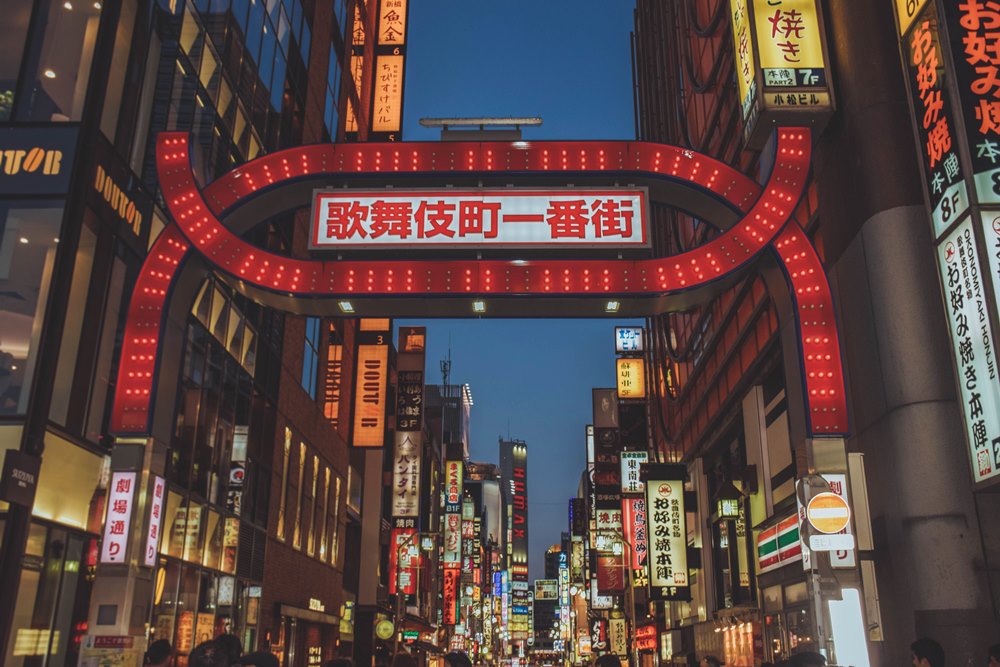
Next to Shibuya is Harajuku – famous for its eccentric Takeshita street with stuff that’s too cute for most people and girls colorfully dressed. Right across the cute craziness is Yogogi-park and the Meji-shrine. Both where pleasantly peaceful. A perfect break before returning to Shinjuku. The place where my hotel was situated but also one of the most famous wards of Tokyo. Famous for its nightlife & neon lights. Most of them in Kabukicho, the most famous red light district of Tokyo. Although it feels very safe there to walk around – like everywhere in Japan.

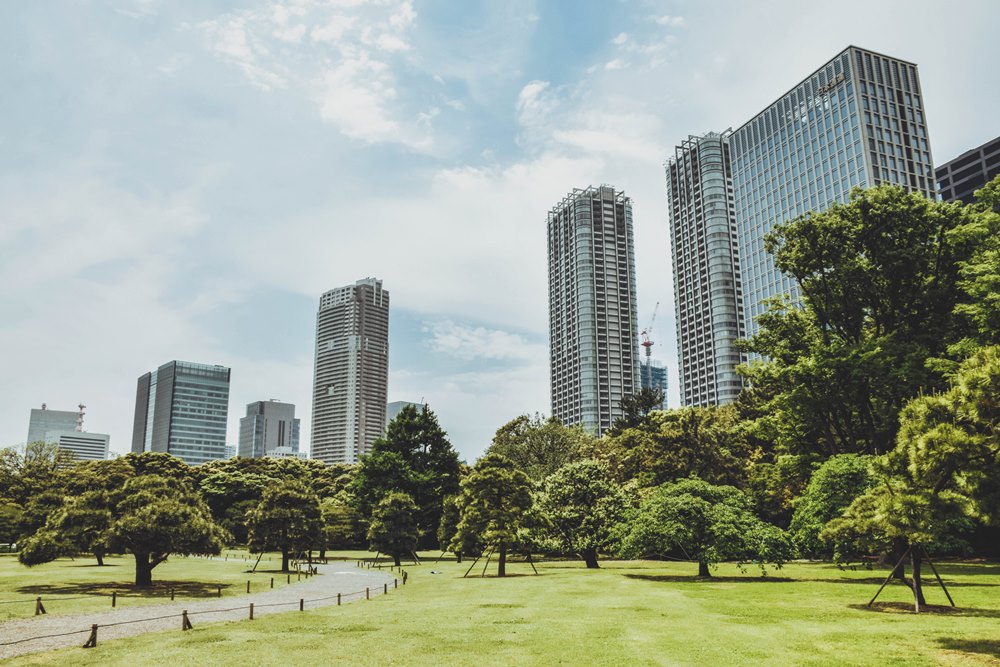
Next day it was time for the other side of Shinjuku. I started with a walk in Shinjuki Gyoen park. A favorite to see cherry blossoms. There were no cherry blossoms left but the park was still beautiful. Afterwards I went to the other side of Tokyo to another park, Hamarikyu Gardens. The wonderful things of the parks in Tokyo is that you would forget you’re in such a metropolis because the parks are extremely peaceful. The thing I loved the most about Hamarikyu Gardens is that you would still see the skycrapers at the side of the park. Quite a contrast: seeing the green of the park and the buildings together. I also had my first green tea at the park. After some instructions how to enjoy the tea (no shoes allowed, how to take and turn the bowl,…) I was very surprised. I don’t like tea – I’m a coffee drinker – but I loved the green tea. It didn’t seem like a tea to me, in Europe we would compare it more to a healthy green smoothie.
During lunch break I was lucky I was in time for the turning of the clock at Shiodome – which is right next to Hamarikyu Gardens. There’s a giant clock build by Studio Ghibli. Like the movies of the Studio, the clock is pure magic. When the clock springs to life, tiny people appear from doors and start hammering, while a special song is playing. Once it’s finished, the clock is set again. People who like Howl’ Moving Castle or other movies should visit the clock – but beware because the clock sequence is only four times a day. It was an ideal crossover to go to Akihabara – The Electric Town – where you can find everything of video games, mangas and computer goods. It’s called a mecca for boy geeks so it’s no wonder there are many maid caffees – places where visitors have a personal “maid”, a girl who’s dressed cute and entertains her visitor with songs & games and makes cute drawings on their food and drinks. I didn’t visit one but you see them everywhere in this area. After crazy Akihabara, it was time for true craziness. I went to the Robot Restaurant in Shinjuku – more of a bar where you get a spectacle of neon lights, kitsch and robots. It’s quite famous and it gets advertised everywhere but to me it wasn’t a highlight of my Tokyo trip. It’s true that it’s something you can’t see anywhere and it’s Tokyo in all its weirdness, but in my opinion you can see the crazy side of Tokyo just by exploring the right areas and just look around. I can understand why people like it – and the place was only filled by tourists – but I’m sure that it’s not everyone’s kind of entertainment.
Next day it was raining a lot which was a spectacle on its own, because as soons as it starts raining, umbrellas pop out of nowhere in the streets. There was nobody without an umbrella – except for me. I crossed the Rainbow Bridge and it was really impressive. The bridge is huge and walking above the dark waters underneath it, you immediately understand how someone created Godzilla – who rises from the same water. But on the other side of the bridge there is something interesting as well. There’s Odaiba , an artificial island. Once built for defensive purposes but now a relaxing, leisure and entertainment district. There’s a 22-meter statue of the robot Gundam, a huge Ferris wheel, a replica of the Statue of Liberty,… Like I said above – you can see crazy things everywhere in Tokyo if you just look around.
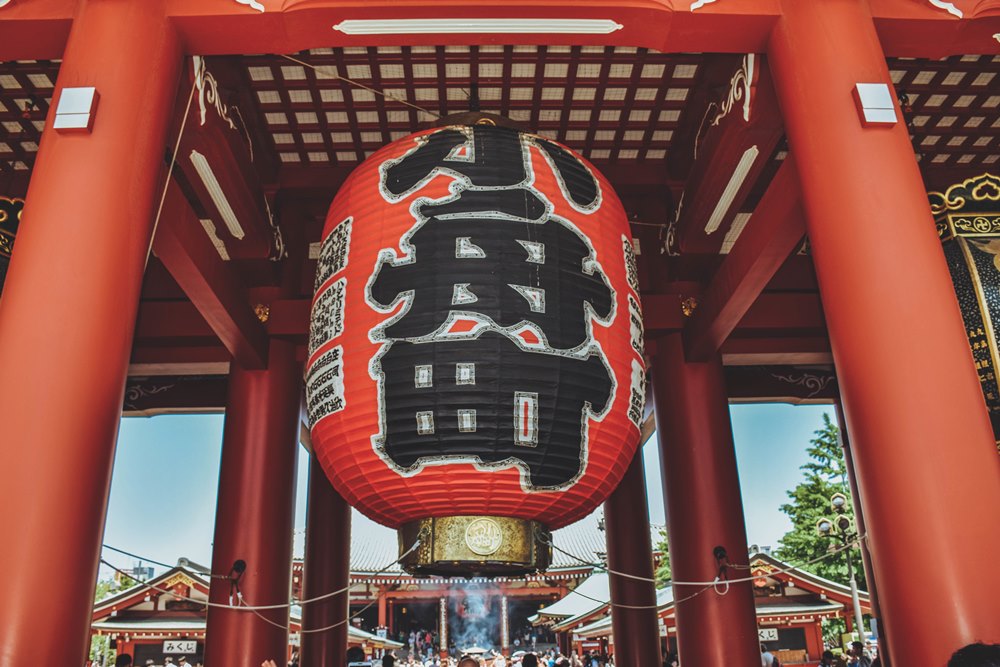
But like I started, there is so much to see in Tokyo… The last days I visited Asakusa to see the oldest temple of Tokyo – Senso-ji – and Ikebukoro but I realized there is so much more to see. The week in Tokyo gave me a really good impression of what Tokyo has to offer. It made me clear what I like most about Tokyo. It made me curious about the other parts of Tokyo that I didn’t see. And it made me hope that my goodbye to Tokyo wouldn’t be a final goodbye.
Some last tips when you visit Tokyo:
- Transport: go for the Japan Rail Pass if you explore Japan but think about buying a metro pass for some days if you only visit Tokyo. Japan Rail Pass is especially interesting if you travel long distances in Japan and it doesn’t cover every metro line in Tokyo.
- Plan beforehand: check out what districts you like most. There is so much to see that you have to decide what you really want to see.
- The craziness of Tokyo: if you want to see something weird, Tokyo has a lot to offer. There a lot of shows, pubs and many other things going from cheap to expensive. But you can also see and experience a lot of Tokyo’s craziness by being at the right places and time. So you don’t need to spend extra bucks if you think that the crazy shows aren’t your thing.
- Go for the unexpected: Tokyo is so huge that for every busy place and for every expensive thing to do, there are cheaper alternatives – often more quite. So think about what you want to do, and rethink what the options are for that experience. Most popular doesn’t always mean that it’s the best option.
 Dimitri Mary Matthew